
Introduction
Api Base Camp (4,100m) sits beneath Api Himal (7,132m) — the highest peak in western Nepal and one of the most remote base camps in the country, in the Api Nampa Conservation Area.
Situated in Darchula district at an altitude of 4,100 m (13,451 ft), Api Base Camp is a key stop on the Api Nampa Base Camp Trek within the Far West Nepal. Locally it is known as Api Himal BC. The nearest settlement is Khati. 5-day trek from Darchula; no road access beyond Khati village. Trekkers reach Api Base Camp as part of the standard trekking route.
History
Api Himal (7,132m) was first climbed by a French-British expedition in 1960. The Api Nampa Conservation Area was established in 2010 to protect the unique trans-Himalayan ecosystem and the endangered snow leopard. The base camp sees fewer than 100 visitors per year, making it one of the most pristine trekking destinations in Nepal.
The far west nepal has been a corridor for trade, pilgrimage, and mountaineering for centuries. Api Base Camp has witnessed the evolution of Nepal’s trekking industry, from the early expeditions of the 1950s to the modern tea-house network that today supports thousands of trekkers each year.
Local traditions reflect the deep cultural heritage of the Himalayan peoples, including the Byansi (seasonal herders). Oral histories, monastery records, and oral traditions document centuries of settlement, religious practice, and adaptation to high-altitude life.
Geography & Landscape
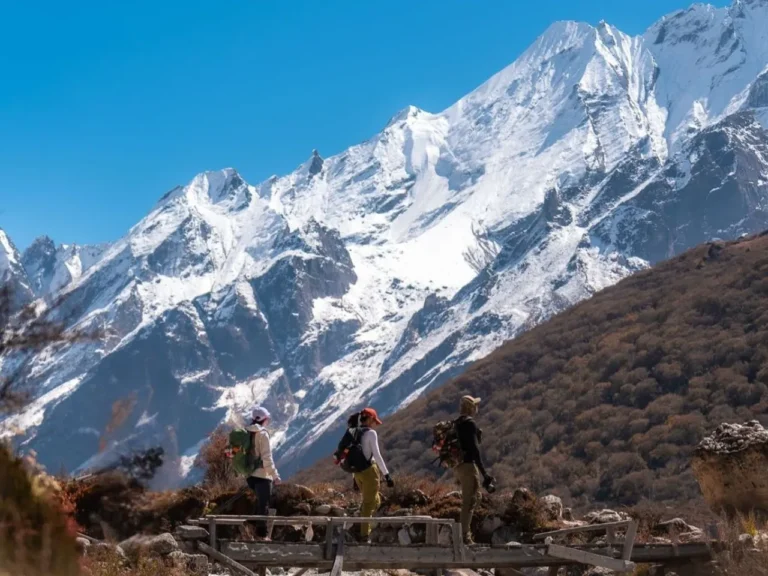
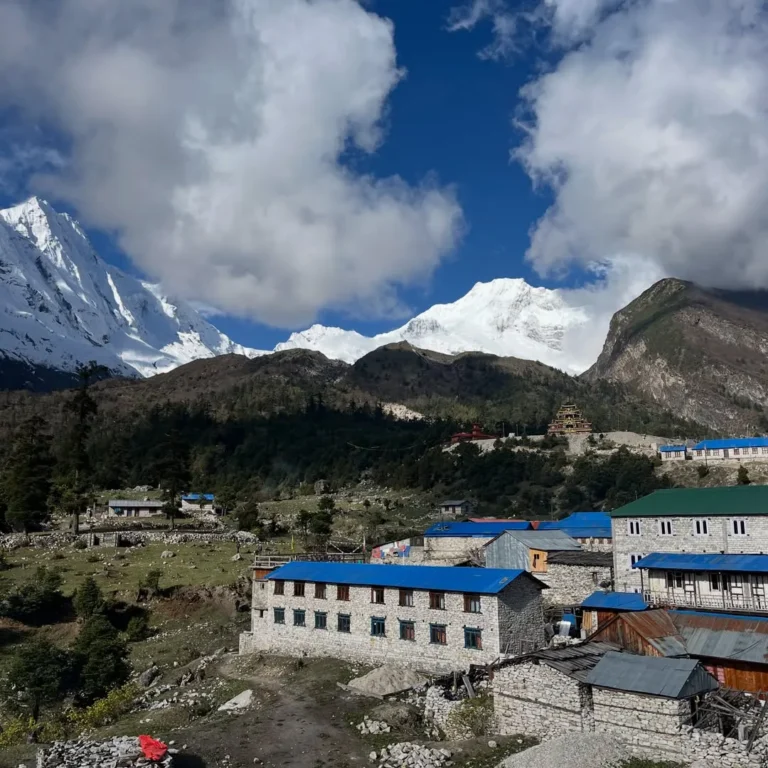
Api Base Camp lies in the Far West Nepal of Nepal at 4100 metres above sea level. The landscape is characteristic of the Nepal Himalaya — dramatic valleys, glacial moraines, alpine meadows, and forested ridgelines shaped by tectonic uplift and glacial retreat over millions of years.
The surrounding topography includes peaks, ridges, and river systems that define the trekking approach. The altitude places Api Base Camp in the alpine zone, with corresponding vegetation and wildlife.
Elevation & Location
- Elevation: 4,100 m / 13,451 ft
- Coordinates: 30.0000° N, 80.6667° E
- District: Darchula
- Region: Far West Nepal
- Route: Api Nampa Base Camp Trek
How to Reach
5-day trek from Darchula; no road access beyond Khati village.
Walking time from the previous stop: 5 days from Darchula (via Latoli, Tinkar, and Khati) (40+ km).
Trekking Route Info
- Difficulty: Strenuous
- Walk hours: 5 days from Darchula (via Latoli, Tinkar, and Khati)
- Distance from previous: 40+ km
- Best season: Spring (Apr–May), Autumn (Sep–Oct)
Trail condition: Steep alpine trail; river crossings and high passes.
What to Expect
A typical day at Api Base Camp begins with the morning Himalayan light filtering through the peaks, followed by breakfast at a teahouse, a steady walk along the trail, and an evening in a warm lodge sharing dal bhat with fellow trekkers and local hosts. The altitude (above 3,500m) requires careful acclimatization and the weather can change rapidly — pack layers and stay hydrated.
Things To Do
- Reach the base camp of Api Himal (7,132m) — western Nepal’s highest peak
- View Nampa (6,759m) and Jethibahurani
- Experience one of Nepal’s most remote and least-visited base camps
- Spot snow leopard, blue sheep, and Himalayan black bear
- Cultural immersion with Byansi herders
Accommodation & Teahouses
Api Base Camp has limited teahouse accommodation, with camping. Rooms are typically basic — twin beds, blankets, and shared bathrooms. Meals include dal bhat, momos, and Tibetan-style dishes.
Food & Dining
Camp-cooked meals Teahouse menus typically feature dal bhat (rice and lentils), momos (dumplings), Tibetan bread, tsampa (roasted barley flour), butter tea, and seasonal vegetables. At higher altitudes, menus are more limited and prices rise due to the cost of transporting supplies.
Culture & Communities
- Ethnic groups: Byansi (seasonal herders)
- Languages: Byansi, Nepali
The communities of the Far West Nepal have preserved their distinctive traditions through centuries of relative isolation. Daily life blends religious practice, agriculture, herding, and — increasingly — trekking tourism.
Religion & Traditions
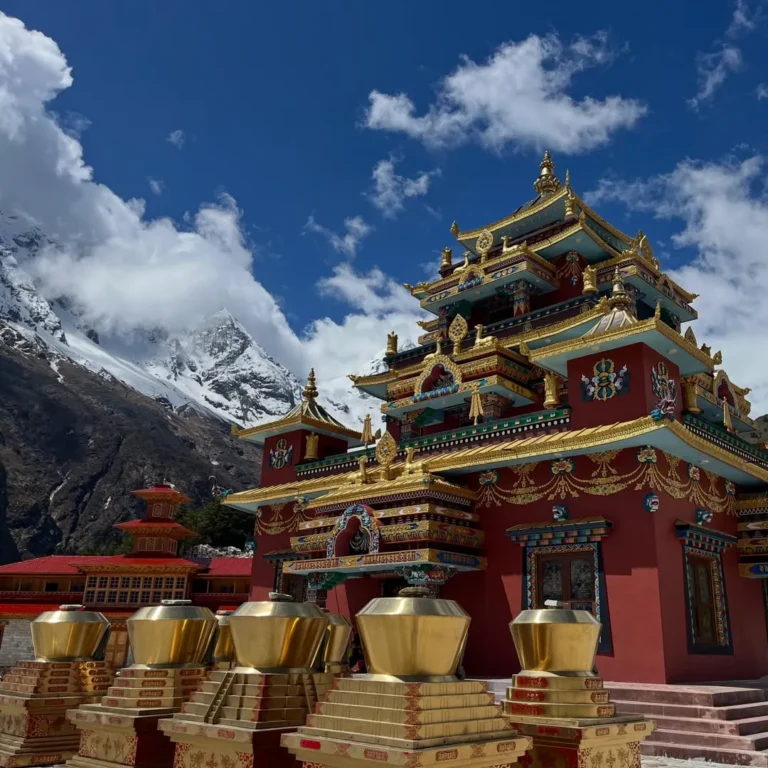
The religious landscape blends Tibetan Buddhism, Hinduism, and — in some regions — the pre-Buddhist Bön and shamanic traditions. Prayer flags, mani walls, chortens, and gompas are part of daily life.
Wildlife & Nature
The ecosystems around Api Base Camp may include Himalayan tahr, blue sheep, musk deer, snow leopard (rare), Himalayan marmot, pika, lammergeier, Himalayan griffon, and Himalayan monal and blood pheasant. Flora ranges from alpine meadow and juniper scrub to alpine meadow.
Best Time to Visit
Spring (Apr–May), Autumn (Sep–Oct). Spring (March–May) brings rhododendron blooms and warming temperatures, while Autumn (September–November) offers the clearest skies and most stable weather. Winter (December–February) brings deep snow and cold that can close high passes. Summer (June–August) is the monsoon season with rain, leeches, and reduced visibility, though the rain-shadow regions of Mustang, Dolpo, and upper Manang remain accessible.
Photography
- Photo spots: Api Himal from base camp
- Sunrise viewpoints: Base camp at dawn
The best light is in the golden hour after sunrise and before sunset. Carry a polarizer for the snow, a wide-angle for the landscapes, and a telephoto for distant peaks and wildlife. Always ask before photographing people.
Travel Tips
- Acclimatize gradually — do not gain more than 400–500m of sleeping altitude per day above 3,000m.
- Carry cash (Nepali rupees) — ATMs are rare above district headquarters.
- Pack layers — temperatures swing sharply with altitude and time of day.
- Bring a refillable water bottle and water purification tablets or a filter.
- Respect local culture — circumamberate stupas and mani walls clockwise, ask before photographing people, and dress modestly.
- Get travel insurance that covers helicopter evacuation above 5,000m.
Nearby Attractions
Api Nampa Conservation Area, Tinkar Valley, Byansi villages
FAQ
What is the elevation of Api Base Camp?
Api Base Camp is at an elevation of 4,100 m (13,451 ft).
Is there Wi-Fi at Api Base Camp?
Wi-Fi is limited or unavailable; check with individual teahouses.
When is the best time to visit Api Base Camp?
Spring (Apr–May), Autumn (Sep–Oct).
How do I reach Api Base Camp?
5-day trek from Darchula; no road access beyond Khati village.
Conclusion
Api Base Camp is a memorable stop on any Far West Nepal trek — combining rich cultural heritage, dramatic Himalayan landscapes, and the warm hospitality of Nepal’s mountain communities. Combine careful planning with an open mindset to make the most of the journey to this remarkable corner of the Nepal Himalaya.
 English
 Deutsch
 Svenska
 Dansk
Dansk Русский
 Français
 Português
 Español
 Polski
 简体中文
简体中文 日本語
日本語 ไทย
ไทย العربية
 한국어
한국어