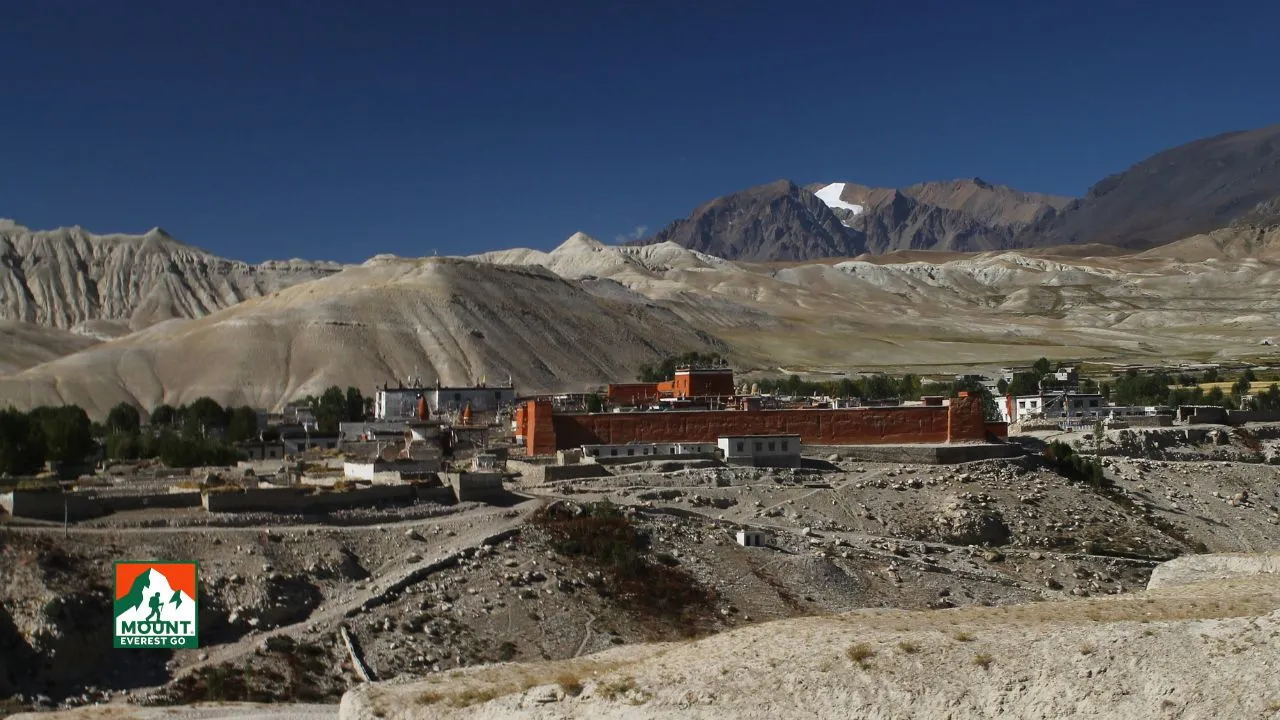
Explore the hidden Kingdom of Lo with the 15-Day Upper Mustang Trek. A once-in-a-lifetime Himalayan journey through ancient monasteries, desert landscapes, and the walled city of Lo Manthang. Includes flights, permits, guide & porter.
-
Bus - Flight
-
4,077m (Gyu La Pass)
-
3 star hotel and Tea house
-
Kathmandu
-
Restricted Area Permit (RAP)
-
Moderate to good; daily treks 5–7 hours.
-
English
-
B-L-D (trekking day)
-
March – May | September – November
The Upper Mustang Trek is one of Nepal’s most culturally rich and restricted trekking adventures. Often called the Last Forbidden Kingdom, Mustang remained isolated from the outside world until 1992. This trek takes you deep into the Tibetan-influenced culture, barren desert canyons, thousand-year-old Buddhist monasteries, and the iconic walled city of Lo Manthang.
Unlike other treks in Nepal, Upper Mustang lies in a rain-shadow region of the Himalayas, making it perfect for trekking even during the summer monsoon. The journey blends spiritual exploration with Himalayan adventure, crossing ancient trade routes and high mountain passes while immersing in the traditions of one of the most mystical regions on earth.
This trek is a rare chance to witness a living heritage that has changed little for centuries.
Highlights
- Discover the walled city of Lo Manthang, the ancient capital of Mustang.
- Explore centuries-old Buddhist monasteries and caves with exquisite murals.
- Cross high mountain passes like Taklam La, Nyi La, and Gyu La Pass.
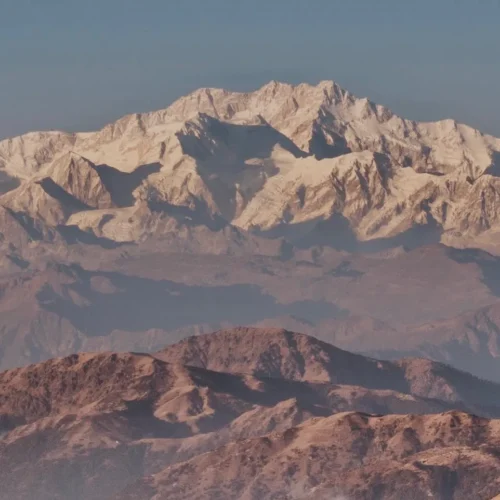
- Panoramic views of Nilgiri, Annapurna, Dhaulagiri, and Tibetan peaks.
- Witness Mustang’s unique desert landscape of canyons, cliffs, and sandstone pillars.
- Cultural encounters with Tibetan-influenced communities.
- Visit the sacred Muktinath Temple, a pilgrimage site for Hindus and Buddhists.
- Rare opportunity to trek in a restricted area of Nepal (special permits required).
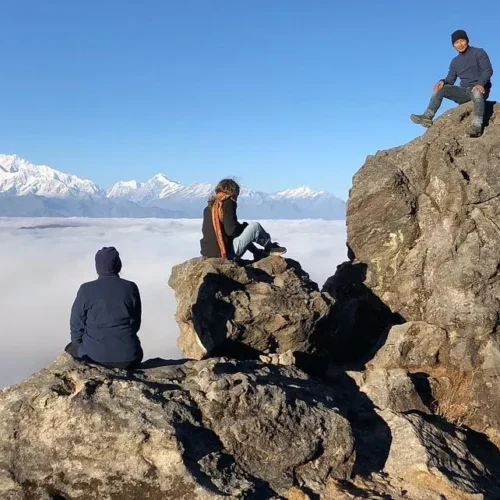
Your adventure begins with a scenic drive from Kathmandu. Leaving the capital’s hustle behind, the road winds through hills and alongside the Trishuli and Marsyangdi rivers. You’ll pass terraced farms, small roadside towns, and lush green landscapes, eventually arriving in the tranquil city of Pokhara. Upon arrival, you can settle in and enjoy the iconic view of the Annapurna mountain range reflected in Phewa Lake.
An exhilarating morning flight takes you through the world’s deepest gorge, with the massive peaks of Annapurna and Dhaulagiri on either side. Landing in the windy, high-desert town of Jomsom is a dramatic shift in environment. From here, your trek begins on the wide, stony bed of the Kali Gandaki River. The relatively gentle walk brings you to Kagbeni, an ancient village of narrow alleys and mud-brick houses that serves as the official entry point to Upper Mustang.
After your permits are checked, you officially enter the restricted territory. The trail climbs above the river, offering spectacular views as you trek through a stark and beautiful landscape. You’ll pass the whitewashed village of Tangbe before being introduced to the region’s signature geological features: immense cliffs of sandstone eroded by the wind into fantastic, fluted formations. The day ends with a short, steep climb to the village of Chele.
This is a challenging day of ascents and descents over high passes. You’ll conquer the Taklam La Pass (3,625 m), from which the views of the peaks and valleys are simply breathtaking. The trail takes you through the charming, green village of Samar, a welcome oasis, before continuing over further ridges and canyons to reach the small settlement of Syangboche.
The trek continues deeper into Mustang’s otherworldly landscape. You will cross two more passes, the Yamda La and the Nyi La (4,010 m), the highest point on this stage of the trek. From the Nyi La, you begin a long descent into the Ghami valley. Ghami is one of the region’s largest villages, notable for its vast fields, a long and beautifully carved Mani wall, and a backdrop of dramatic, rust-colored cliffs.
Today’s walk takes you through the heart of Mustang’s arid, high-altitude desert. The barren terrain and vast, empty spaces give a profound sense of remoteness. Your destination is Tsarang, a historically significant village. It is dominated by a huge, five-story medieval fortress and an old, red monastery, both perched on a cliff edge, hinting at the village’s former importance.
The final approach to the ancient capital is filled with anticipation. The trail leads you to the Lo La Pass (3,850 m), a windy saddle that offers the first, awe-inspiring view of the walled city of Lo Manthang below. This iconic sight is a major highlight of the entire journey. A steady descent brings you to the gates of this legendary, isolated kingdom where you will spend the next two nights.
Immerse yourself in the unique culture and history of Lo Manthang. You can spend the day exploring the narrow streets, observing the local life, and visiting the city’s four major monasteries (gompas), including the 15th-century Jampa Lhakhang. You can also view the King’s Palace from the outside and perhaps arrange a side trip to the fascinating Chhoser caves, ancient cliff dwellings located just outside the city.
You begin the return journey on an alternate path that is rich in both scenery and culture. The highlight is a visit to Ghar Gompa, a revered monastery that dates back to the 8th century, making it one of the oldest in Nepal. The route also takes you through Drakmar, an area renowned for its spectacularly dramatic and intensely red cliffs.
This is a longer day of trekking as you retrace your steps through the vast landscapes of Mustang. While the path is familiar, the reverse perspective offers entirely new views of the valleys and distant mountains. It’s a day to appreciate the scale and solitude of the region as you make steady progress back towards Samar.
Continuing your descent, the trail leads you back towards the Kali Gandaki valley. You will pass Chele and descend steeply to the riverbed. The day’s trek finishes in Chhusang, a village nestled beneath towering cliffs that are dotted with ancient, inaccessible cave dwellings.
Today involves a strenuous climb as you diverge from the Upper Mustang trail and head to the famous pilgrimage site of Muktinath. The ascent is rewarded with excellent views. Muktinath is a spiritually significant place for both Hindus and Buddhists, featuring a temple with 108 sacred water spouts and an eternal flame fueled by natural gas.
On your final trekking day, you’ll make a long descent from Muktinath. The path takes you through the interesting village of Jharkot before rejoining the main trail leading down to the Kali Gandaki. The last stretch into the windy town of Jomsom marks the successful completion of your high-altitude adventure.
An early morning flight ensures you avoid the strong afternoon winds of the gorge. Enjoy the spectacular mountain views one last time as you fly back to the lush, green valley of Pokhara. The afternoon is free for you to relax, explore the lakeside area, and celebrate your accomplishment.
The final leg of your journey is the drive back to Kathmandu. It’s a day for reflection on the incredible landscapes and unique culture you experienced in the remote Kingdom of Mustang, arriving back in the capital by late afternoon.
- All airport pick-up & drop-off (private vehicle).
- Kathmandu → Pokhara → Kathmandu by tourist bus.
- Pokhara → Jomsom → Pokhara flights (with taxes).
- 2 nights hotel in Pokhara (Hotel Lakestar, attached bathroom).
- 12 nights of trekking lodge accommodation.
- All meals during trek (B/L/D) + fresh fruits.
- Licensed English-speaking guide + porter (1 porter per 2 trekkers).
- Insurance, food, accommodation, and salary for staff.
- Annapurna Conservation Area Permit (ACAP).
- Upper Mustang Restricted Area Permit ($500 per person for 10 days).
- Medical kit & oximeter.
- Sleeping bag, down jacket, and duffle bag (on request).
- Souvenir T-shirt & trek completion certificate.
- Farewell dinner in Kathmandu.
- International flights.
- Nepal visa fee.
- Hotels & meals in Kathmandu (before/after trek).
- Lunch & dinner in Pokhara.
- Personal expenses: snacks, Wi-Fi, hot showers, charging fees.
- Extra accommodation in case of early arrival/return.
- Tips for guide & porter.
- Travel insurance (mandatory for booking).
- Costs due to delays (weather, strikes, natural disasters).
Packing List for Upper Mustang Trek
Clothing
- Trekking boots (well broken-in)
- Warm down jacket & fleece jacket
- Quick-dry trekking shirts & pants
- Thermal base layers
- Lightweight rain jacket/windbreaker
- Woolen hat, gloves, buff/scarf
Gear
- Sleeping bag (down, rated -10°C to -15°C)
- Trekking poles
- Sunglasses with UV protection
- Headlamp with spare batteries
- Daypack (30–40L) + Duffle bag
Accessories
- Sunscreen (SPF 50+), lip balm
- Water bottles or hydration system + purification tablets
- First aid kit & personal medications
- Power bank / solar charger
- Reusable snacks (nuts, energy bars)
Know More about Upper mustang trek
Trek Profile & Difficulty
- Trip Grade: Moderate to Strenuous.
- Daily Hiking: Expect to walk for
5–7hours on most days, with some more challenging days lasting7–8hours. - Maximum Altitude: The highest point of the trek reaches
4,077 m. - Terrain: The route features gradual ups and downs, requiring you to cross multiple high passes between
3,600 mand4,000 m.
Logistics & Transportation
- Travel: The package includes a tourist bus between Kathmandu and Pokhara, a scenic flight between Pokhara and Jomsom, and any necessary local transfers.
- Permits: All essential permits are included in the package:
- Upper Mustang Restricted Area Permit (RAP)
- Annapurna Conservation Area Project (ACAP) permit
Accommodation & Meals
- In Pokhara: You will stay in a tourist-standard hotel with a private attached bathroom.
- On Trek: Accommodation will be in local tea houses. Attached bathrooms are only available in a few villages; expect basic, shared facilities elsewhere.
- Meal Plan:
- Pokhara: Breakfast is included.
- Trek: Full board is provided (Breakfast, Lunch, and Dinner), supplemented with seasonal fruit.
Services & Facilities
- Drinking Water: Boiled and filtered water is available at lodges. It is recommended to also carry your own water purification tablets.
- Electricity & Charging: Available in most villages for a small fee. Bringing a personal power bank is highly advised.
- Connectivity: Wi-Fi is available in some locations (e.g., Jomsom, Kagbeni, Lo Manthang) but is often slow, patchy, and requires payment.
Support Staff & Luggage
- Guide: You will be led by a government-licensed, English-speaking trekking guide.
- Luggage: A duffel bag will be provided for your gear.
- Porter Support: One porter is assigned to carry the luggage for every two trekkers, with a strict individual weight limit of
9 kgper trekker.
Safety & Requirements
- Medical Support: The guide carries a first-aid kit and an oximeter to monitor your blood oxygen levels at altitude.
- Insurance: It is mandatory to have comprehensive travel insurance that explicitly covers high-altitude helicopter evacuation.
- Age & Fitness: The minimum age is
12years old. A good level of physical fitness is essential. Minors must be accompanied by a parent or guardian.
Cultural & Environmental Responsibility
- Respect Culture: Trekkers are expected to be respectful of the local customs and traditions.
- Environment: Follow a “leave no trace” ethos. You must pack out your non-biodegradable waste.
- Drone Policy: Flying a drone is not permitted without obtaining a specific, separate permit.
It’s a moderate trek with some long days (6–7 hours of walking). No technical climbing required, but good fitness is recommended.
Yes. You’ll need the Upper Mustang Restricted Area Permit ($500) and ACAP permit. Both are included in our package.
Spring (Mar–May) and Autumn (Sep–Nov) are best, but since Mustang is in a rain-shadow, it’s also possible during summer (Jun–Aug).
The highest point is 4,077m, so mild symptoms are possible. Our guides carry oximeters and first aid, and the itinerary allows gradual acclimatization.
Yes, in major villages (Jomsom, Kagbeni, Lo Manthang), but connections are slow and paid.
No. Nepal government regulations require at least 2 trekkers and a licensed guide for Upper Mustang.
Tea houses with basic but comfortable facilities. Some locations provide attached bathrooms.


Write a Review