

Nepal’s two most famous treks, Annapurna Base Camp (ABC) and Everest Base Camp (EBC), both promise jaw-dropping mountains, warm Sherpa hospitality, and bragging rights for life. Yet they feel surprisingly different underfoot. One winds through leafy rhododendron forests and stone-roofed villages; the other climbs into the thin air of the world’s highest peaks. Choosing between them comes down to time, fitness, budget, and the style of adventure you want. Below is a side-by-side look at the trails, scenery, cost, and day-to-day experience so you can book the trek that fits you best.
Quick Glance
| Feature | Annapurna Base Camp | Everest Base Camp |
| Max elevation | 4,130 m / 13,550 ft | 5,364 m / 17,598 ft |
| Typical length | 7–12 days | 12–16 days |
| Accommodation | Teahouses | Teahouses |
| Internal flights | None | Kathmandu – Lukla |
| Best seasons | Mar–May & Oct–Nov | Mar–May & Oct–Nov |
| Crowds | Moderate | Busy |
| Total cost (approx.) | USD 700–1,200 | USD 1,200–1,800 |

1. Scenery and Landscape
Annapurna Base Camp
The trail starts in lowland terraced fields where farmers grow rice and millet. Within two days you are walking through thick bamboo and rhododendron forest, home to langur monkeys and vivid birds. After Chhomrong the gorge narrows until you pop into the Annapurna Sanctuary, a huge natural amphitheatre ringed by Annapurna I (8,091 m), Machhapuchhare, Hiunchuli and Gangapurna. Sunrise here paints the entire circle of peaks gold.
Everest Base Camp
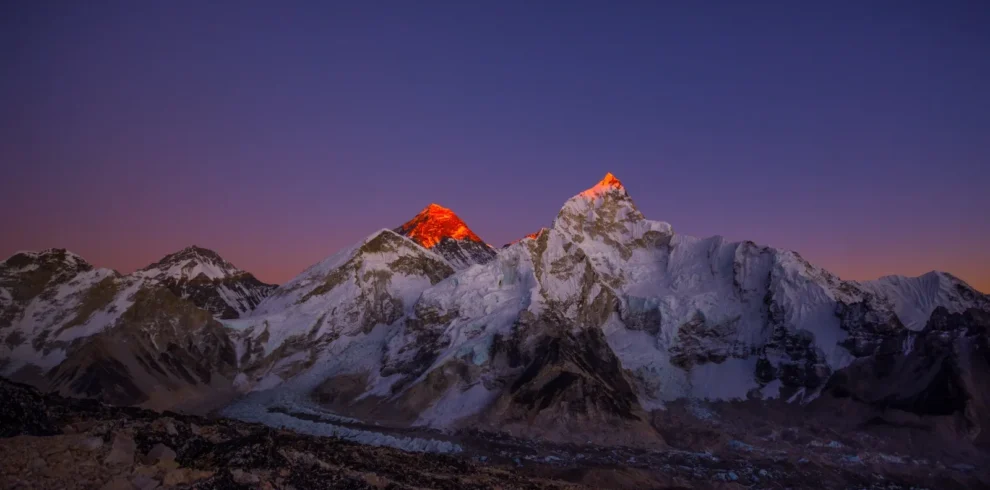
You fly to the tiny mountain airstrip of Lukla, then follow the Dudh Kosi river valley. Pine forest gradually gives way to dwarf juniper and bare rock. Instead of a single cirque, you get a long corridor of giants: Ama Dablam, Lhotse, Nuptse, and finally Everest itself. The highlight for many is not the base camp boulder field but the pre-dawn climb to Kala Patthar (5,545 m) for 360-degree Himalayan views.
Verdict
Choose ABC for intimate, green valleys and a 360-degree mountain theatre. Choose EBC if you want to stand at the foot of the planet’s tallest peak and gaze across an entire range of 8,000-metre monsters.
2. Difficulty and Acclimatisation
Both treks are classed as “moderate” by Nepali standards, yet EBC is harder simply because of altitude. ABC stays below 4,200 m, so most hikers cope well with two acclimatisation days. EBC crosses 5,000 m, where oxygen drops to half that at sea level. A slow ascent schedule, usually two rest days in Namche Bazaar and Dingboche, is essential to avoid altitude sickness.
Daily walking hours
- ABC: 4–7 hours
- EBC: 5–8 hours, with one long 8–9 hour day from Lobuche to base camp and back.
If you have previously suffered from altitude illness, or you are short on time, ABC is the safer bet.
3. Getting There and Cost
Annapurna
No domestic flights are required. A tourist bus or private jeep leaves Kathmandu or Pokhara and reaches the trailhead at Nayapul in under eight hours. This keeps the price low and eliminates weather delays.
Everest
You must fly Kathmandu–Lukla (or take a 6-hour jeep to Salleri and walk two extra days). Lukla flights are reliable in peak seasons but can be grounded for days in poor visibility. The round-trip flight alone adds roughly USD 380 to your budget.
Budget snapshot (from Kathmandu, teahouse style)
- ABC: USD 30–40 per day on the trail
- EBC: USD 45–60 per day on the trail
4. Accommodation and Food
Both regions use well-developed teahouse networks. Rooms are basic, two beds, shared squat or sit toilet, occasionally solar-heated shower. Expect to pay USD 3–8 for the room if you eat meals onsite.
ABC menus offer dal bhat (rice-lentil staple), noodles, momos, pasta, even pizza. EBC teahouses serve similar food, but prices rise with altitude; a plate of dal bhat can hit USD 8–10 in Gorak Shep. Carry extra cash (Nepali rupees) for snacks and hot drinks, ATMs are rare above Namche.
5. Crowds and Trail Culture
Everest’s reputation means busier trails, especially between Namche and base camp. If you crave solitude, start early each morning or trek in late February/early March or December. Annapurna still draws plenty of hikers, yet the circuit feels quieter once you leave the popular Poon Hill loop.
Culturally, Everest is Sherpa country: Buddhist monasteries, mani walls and prayer wheels dominate. Annapurna is a mix of Gurung, Magar and Thakali villages where you may stay in a homestay and hear traditional folk songs in the evening.
6. Weather Windows
Spring (March–May)
Clear mornings, warm days, rhododendrons in bloom on ABC; stable weather but hazy afternoons on the Everest trail.
Autumn (October–November)
Crisp air, clearest mountain views, busiest teahouses. Book flights and rooms early for either trek.
Winter (December–February)
Cold but doable. ABC can be snowy above 3,500 m; EBC temperatures drop to –25 °C at night, yet trails are almost empty.
Monsoon (June–September)
Heavy rain in Annapurna causes leeches and slippery paths; Everest is partly in the rain shadow, but clouds hide the peaks. Not ideal for first-time trekkers.
7. Side Trips and Extensions
Annapurna
- Poon Hill (3,210 m) sunrise add-on, 2 extra days
- Short Annapurna Circuit Trek up to Manang or Tilicho Lake if you have 5–7 more days
Everest
- Gokyo Lakes and Cho La pass, adds 3–4 days
- Island Peak or Lobuche East climbing preparation courses
- Three Passes Trek for the full circuit experience
8. When to Choose Which Trek
Pick Annapurna Base Camp if you:
- Have one week or slightly more
- Prefer lower altitude and gentler acclimatisation
- Want lusher, varied scenery with villages and forests
- Are on a tighter budget or dislike domestic flights
- Enjoy quieter trails
Pick Everest Base Camp if you:
- Dream of standing beneath the world’s highest mountain
- Have at least two weeks
- Are comfortable with higher altitude and potential flight delays
- Want iconic viewpoints like Kala Patthar and the Khumbu Icefall
- Like the buzz of a classic, internationally famous route
Planning Tips for Both Treks
- Insurance: Buy cover that includes helicopter evacuation above 6,000 m.
- Guides & Porters: Not compulsory, but hiring locals spreads income and boosts safety.
- Gear: Broken-in boots, down jacket, sleeping bag rated to –10 °C, micro-spikes for winter.
- Water: Use boiled or purified water; avoid single-use plastic bottles.
- Permits:
- ABC: Annapurna Conservation Area Permit (ACAP) + TIMS card
- EBC: Sagarmatha National Park permit + TIMS card (local Khumbu permit also payable in Lukla)
- Cash: Exchange in Kathmandu or Pokhara; ATMs in Namche charge high fees.
Ready to Book?
If Everest is calling, check out the classic 14-day itinerary here: Everest Base Camp Trek – 14 Days. Prefer the Annapurna region but still want a twist? The Short Annapurna Circuit Trek squeezes high passes and Tibetan-style villages into a tight schedule.
Final Thoughts
There is no “wrong” choice, only the trek that matches your calendar, wallet, and mountain dreams. Annapurna Base Camp delivers big scenery in a short, affordable package with less risk of altitude issues. Everest Base Camp offers the ultimate Himalayan icon, higher challenges, and a buzzing trail culture you will remember forever. Decide what matters most to you, book that flight to Nepal, and start training. The Himalayas are waiting.


 English
 Deutsch
 Svenska
 Dansk
Dansk Русский
 Français
 Português
 Español
 Polski
 简体中文
简体中文 日本語
日本語 ไทย
ไทย العربية
 한국어
한국어