
Standing at Kala Patthar at sunrise, watching the first light turn Everest gold above a sea of clouds, that moment is what every trekker imagines. What they do not always imagine is the difference between stepping out to a crystal-clear morning in October versus squinting through monsoon haze in July. The same trail. Completely different experience.
Choosing the right month for your Everest Base Camp trek is arguably the single most important decision you will make in planning it. Weather, crowd levels, Lukla flight reliability, trail conditions, cultural festivals, and cost all shift dramatically through the year. This guide covers all twelve months, with real temperature data, honest crowd assessments, and the insider knowledge that local guides carry in their heads but rarely write down.
The short answer: April–May and October–November are the best months for most trekkers. But every month has a story. Read on to find the one that matches your goals.
Quick Reference: Month-by-Month Rating at a Glance
Use this table to compare every month at a glance. Detailed breakdowns for each month follow below.
| Month | EBC Day / Night | Weather | Crowds | Flights | Rating |
| January | -15° / -25° | Cold, clear, snow | Very low | Reliable | Experienced only |
| February | -13° / -23° | Cold, clearing | Low | Reliable | Experienced only |
| March | -7° / -15° | Warming, stable | Moderate | Good | ★★★★ Good |
| April | +2° / -10° | Clear, rhododendrons | High | Excellent | ★★★★★ Best |
| May | +5° / -5° | Warm, late cloud | Moderate | Good | ★★★★★ Best |
| June | +8° / -2° | Monsoon starts | Very low | Unreliable | ★★ Avoid |
| July | +6° / -1° | Heaviest rain | Minimal | Poor | ★ Skip |
| August | +7° / -1° | Heavy rain | Minimal | Poor | ★ Skip |
| September | +5° / -5° | Clearing monsoon | Low–moderate | Improving | ★★★ OK (late Sep) |
| October | +2° / -10° | Crystal clear | Peak / very busy | Excellent | ★★★★★ Best |
| November | -1° / -14° | Clear, colder | Moderate | Excellent | ★★★★ Great |
| December | -7° / -20° | Cold, dry, clear | Low | Reliable | ★★★ Experienced |
Temperature shown is at Everest Base Camp (5,364m). Lukla (2,860m) is typically 8–12°C warmer during the day.
Understanding EBC Weather: The Basics
The Everest region sits at extreme altitude. Everest Base Camp itself (5,364m / 17,598ft) is higher than most peaks in Europe and the Americas. The weather is shaped by four distinct seasons driven by the South Asian monsoon cycle, and the altitude creates extreme conditions even in the warmest months.
One rule matters above all others: for every 1,000 metres of altitude gained, the temperature drops approximately 6.5°C. The walk from Lukla (2,860m) to EBC (5,364m) covers a 2,500m elevation gain, meaning EBC is on average 16°C colder than Lukla at any given time of year. The numbers in this guide reflect real conditions at EBC, not the relatively balmy temperatures at the start of the trail.
Wind is the factor most first-time trekkers underestimate. A -5°C day with no wind is manageable in good layers. A -5°C day with a 25 km/h wind feels like -15°C. Wind is hardest to predict and hits hardest at the exposed high passes and on the final approach to EBC.
Lukla flights (and since late 2023, some flights from Manthali/Ramechhap) are the single biggest logistical risk of the EBC trek. Always build 2 buffer days into your itinerary for flight delays, every month, every season.

Winter (December–February): Solitude at a Price
Winter on the EBC trail is the territory of experienced trekkers who know what they are signing up for. The cold is serious, many teahouses above Namche Bazaar reduce services or close entirely, and the Khumbu Icefall is at its most treacherous. In exchange, you get empty trails, extraordinary photographic clarity, and a raw, unmediated encounter with the Himalayas.
| ❄️ December ★★★ Experienced trekkers | EBC (5,364m): Day -7° / -20°C | Night Can reach -28°C at night Lukla (2,860m): Day 5°–10°C | Night 0°–3°C Crowds: Low — trails significantly emptier than peak season Flights: Generally reliable — clear, dry conditions Rain/Snow: Dry — occasional light snow above 4,000m |
What December is really like
December marks the transition into proper winter. Daytime at EBC hovers around -7°C, but nights drop hard, temperatures at Gorak Shep regularly fall to -20°C or below. The skies are typically crystal clear, making December one of the best months for unobstructed mountain photography if you can tolerate the cold.
Teahouse availability becomes patchier above Namche. Many lodge owners at higher elevations, Dingboche, Lobuche, Gorak Shep, reduce their offerings or close some facilities. Water pipes freeze. Hot showers disappear. Carrying your own sleeping bag rated to at least -20°C is non-negotiable.
The upside is real: trails are quiet, Namche Bazaar feels like a village again rather than a trekking highway, and the mountains are fully visible with no afternoon cloud build-up. If you are an experienced cold-weather trekker, December offers EBC at its most dramatic.
- Book accommodation in advance — fewer options open
- Carry a -20°C rated sleeping bag as standard
- Start each day early — daylight is reduced (9–10 hours)
- Plan extra buffer days in Kathmandu for unexpected weather
Secret advantage: December prices are noticeably lower than peak season, the same trek with the same agency can cost 10–20% less.
| 🥶 January Experienced trekkers only | EBC (5,364m): Day -15° / -25°C | Night Below -30°C recorded at Gorak Shep Lukla (2,860m): Day 0°–5°C | Night -3°–0°C Crowds: Very low — trail feels empty Flights: Reliable when clear — some snow delays possible Rain/Snow: Dry but snow possible at any altitude above 3,500m |
What January is really like
January is the coldest month on the EBC route. Temperatures at Base Camp regularly drop below -25°C at night, and wind chill can make exposed sections feel dangerous without full expedition-weight gear. The Khumbu Icefall, visible from EBC, is at its most volatile in winter.
That said, January can be a deeply beautiful month on the trail. The air is the clearest of any season. Frozen waterfalls. Snow-covered prayer flags. Ama Dablam rising from a perfect blue sky. The few trekkers you meet share a bond that peak-season crowds dilute.
Several teahouses above Namche are closed or minimally staffed in January. Confirm accommodation before you go. Some high-altitude stops have reported frozen water supplies requiring staff to melt snow for drinking.
- Full expedition cold-weather kit required — no shortcuts
- Confirm every teahouse is open before departure
- Consider hiring an extra porter to carry emergency gear
- Acclimatisation is harder in cold, dry winter air — allow extra days
| 🌤️ February Experienced trekkers only | EBC (5,364m): Day -13° / -23°C | Night Nights below -25°C possible at EBC Lukla (2,860m): Day 3°–10°C | Night -1°–3°C Crowds: Low — noticeably quieter than March Flights: Generally reliable — clearer than Jan, stable Rain/Snow: Dry — lingering snow above 4,000m slowly melting |
What February is really like
February is the turning point of Himalayan winter. The temperatures remain extreme at altitude, nights at EBC are still in the -20s°C, but the days begin to lengthen slightly and the first hints of spring appear in the lower valleys. Rhododendron buds are forming below 3,000m.
Flight reliability is generally good in February. The skies are clear, and Lukla flights run on schedule more often than in the monsoon months. Trails are quiet. February is particularly recommended for trekkers who want a winter challenge but prefer the improving weather trajectory of late winter over the absolute depths of January cold.
February trekkers sometimes catch the Hindu festival of Holi in Kathmandu, a chaotic, joyful celebration of the end of winter. Arriving in Kathmandu during Holi (usually late February or early March) adds a remarkable urban cultural experience before the trek.
- Layers are everything — temperature swings of 25°C between midday and midnight
- Check if your TIMS card and park permits are available — offices run limited hours in winter
- Lukla flights: early morning departures, always

Step into the heart of the Himalayas and follow the legendary trail to Everest Base Camp. This 14-day adventure blends…
The Sherpani Col Pass Trek is a 24–30 day high-altitude expedition linking Makalu Barun National Park to the Everest region….
The Serang Gompa Trek is a profound journey into the "Hidden Valley of Kyimolung," one of the sacred Beyuls (hidden…
A challenging and rewarding 16-day adventure combining Gokyo Cho La Pass, and Everest Base Camp. The Gokyo Chola Pass Everest…
Shey Phoksundo Lake trek on a 12-day guided adventure. Explore the remote Dolpo region, witness the unique Bon culture, and…

The Saipal Himal Base Camp Trek is a 20-day adventure into one of Nepal’s most remote and unexplored regions. This…

The Nar phu Valley and Tilicho Mesokanto Pass Trek is an off-the-beaten-path Himalayan journey that takes you through the hidden…
Spring (March–May): The Best Overall Season
Spring is widely considered the single best season for the EBC trek, and for good reason. Weather is stable, temperatures are moderate, the rhododendron forests blaze with colour, and Base Camp fills with Everest expedition teams creating an atmosphere that no other season can replicate. If you can only go once in your life, go in spring.
| 🌸 March ★★★★ Excellent — great value | EBC (5,364m): Day -7° / -15°C | Night Approaching -18°C on cold nights Lukla (2,860m): Day 8°–16°C | Night 2°–6°C Crowds: Moderate — building through the month Flights: Good and improving Rain/Snow: Dry — occasional afternoon cloud, no significant rain |
What March is really like
March is the sleeper hit of the EBC trekking calendar. The peak season crowds of April and October have not yet arrived, prices are lower, and the trail is genuinely enjoyable without the Namche Bazaar hotel scramble. Meanwhile, conditions are already excellent.
Lower elevations are alive with early rhododendrons, the first blooms appear in the forests between Phakding and Namche from mid-March. The air is crisp and clear. Temperatures at EBC are still cold (-7°C daytime) but are 8°C warmer than January.
March is increasingly popular with experienced trekkers who know it delivers most of what April offers at lower cost and with more space. Book accommodation as you go rather than far in advance, teahouses are well-open but rarely full.
Best month for photographers who want dramatic light without competing for sunrise positions at Kala Patthar.
- Rhododendron season begins mid-March below 3,000m — peaks in April
- Everest climbing teams beginning to arrive at Base Camp by late March
- Namche market day (Saturday) — one of the best shopping experiences on the trail
- Lower prices than April — often 10–15% cheaper for the same package
| 🌺 April ★★★★★ The Single Best Month | EBC (5,364m): Day +2° / -10°C | Night Around -12°C at EBC on cold nights Lukla (2,860m): Day 10°–18°C | Night 5°–9°C Crowds: High — busiest spring month on trail Flights: Excellent — most reliable of the year Rain/Snow: Mostly clear — very little rain or snow |
What April is really like
April is the crown of the EBC trekking calendar. Near-perfect conditions align simultaneously: stable weather, moderate temperatures, near-zero precipitation, maximum rhododendron bloom, peak Lukla flight reliability, and the extraordinary atmosphere of Everest Base Camp during climbing season.
The ‘Yellow Tent City’ at Base Camp, the expedition camps preparing for Everest summit attempts, is at its most active in April and early May. You will share the trail (and Base Camp) with mountaineers from around the world. The atmosphere is electric in a way that October, for all its beauty, cannot match.
Temperatures at Lukla range from 10°C to 18°C during the day, making lower-section walking comfortable for all fitness levels. At EBC, daytime highs reach 0°C to +5°C with nights around -10°C to -12°C, cold, but entirely manageable in proper gear. The skies are predominantly clear through April, with only late afternoon cloud build-up possible.
The one trade-off is crowds. April is the busiest spring month on the trail, and popular teahouses at Namche, Tengboche, and Dingboche fill up fast. Book accommodation 3–6 months in advance and confirm Lukla flights early. But do not let this deter you, the trail is big enough, and the reward is everything you came for.
Everest Day is celebrated on 29 May each year. The legendary Tenzing-Hillary Marathon, 42km from Base Camp to Namche Bazaar, takes place around this date. If your itinerary overlaps, you will witness one of the most extraordinary sporting events on earth.
- Book teahouses in Namche, Dingboche, and Gorak Shep 3–4 months ahead
- Lukla flights are at their most reliable — but still book morning slots
- Rhododendrons are at peak bloom below 4,000m
- Base Camp is packed with expedition teams — ask your guide to introduce you
- Carry full cold-weather gear regardless of warm daytime temps — altitude changes fast
| 🌿 May ★★★★★ Excellent (especially early May) | EBC (5,364m): Day +5° / -5°C | Night EBC nights around -7°C to -10°C Lukla (2,860m): Day 12°–20°C | Night 6°–10°C Crowds: Moderate — thins out after mid-May Flights: Good — slight risk of early monsoon cloud from late May Rain/Snow: Mostly clear but afternoon clouds increase late May |
What May is really like
May is the warmest month of the spring trekking season and, for many experienced trekkers, a personal favourite. The first half of May is nearly perfect: crowds are lighter than April, temperatures are the most comfortable of any month, and the high passes remain snow-free.
Later in May, the approaching monsoon begins to make its presence felt. Afternoon clouds build more reliably than in April. Occasional rain appears at lower elevations. By late May, summit teams have either succeeded or are waiting for the brief weather window before the monsoon closes the climbing season. The energy at Base Camp is at peak intensity.
Late May (after the 20th) brings noticeably more cloud cover and occasional rain at lower altitudes. If your priority is photography, aim for early May or shift to October instead.
- Early May: ideal conditions with lighter crowds than April
- May 29: Everest Day — the Tenzing-Hillary Marathon if your dates align
- Late May trekkers may encounter monsoon precursors — pack waterproofs
- Last good month for EBC before the monsoon arrives
May is the last month to see active expedition teams at Base Camp. By early June, they have either summited or retreated.

Monsoon (June–August): For Specialists Only
The South Asian monsoon reaches Nepal’s Himalayas in June and dominates through August. This is the hardest season to trek EBC, not because of cold, but because of rain, leeches, flight disruption, muddy trails, and the near-total loss of mountain views. Most reputable guides will advise against planning EBC during these months.
That said, the Khumbu region sits in a rain shadow compared to the western Nepal ranges, and some trekkers report successful EBC completions in June with good fortune and careful timing. This is the exception, not the rule.
| 🌧️ June ★★ Difficult — plan carefully | EBC (5,364m): Day +8° / -2°C | Night Warmest nights of the year at this altitude Lukla (2,860m): Day 18°–25°C | Night 8°–12°C Crowds: Very low — trails almost empty Flights: Unreliable — regular delays and cancellations at Lukla Rain/Snow: Heavy rain at lower elevations, clouds obscure peaks |
What June is really like
June marks the start of the monsoon. The full impact doesn’t always arrive instantly, the first week or two can still offer trekking windows, especially in the Khumbu which sits in a partial rain shadow. By mid-June, however, trails below 3,000m are muddy and leech-infested, visibility is poor, and Lukla flights are disrupted regularly.
Temperatures are actually quite warm at lower elevations, Lukla can feel almost hot, but the constant rain and cloud cover mean you will see little of the mountains you came to experience. The landscape is extraordinarily lush and green, waterfalls are thundering, and the trail is almost deserted. Some trekkers find this deeply appealing.
Several major insurance companies reduced or suspended Nepal trekking coverage following the 2025/26 fraud scandal. Always verify your insurance covers high-altitude helicopter evacuation before any trek, but especially in June when flight disruption makes emergency logistics complex.
| ⛈️ July ★ Not recommended | EBC (5,364m): Day +6° / -1°C | Night Mildest nights of the year Lukla (2,860m): Day 20°–28°C | Night 10°–15°C Crowds: Minimal — the trail is effectively empty Flights: Poor — Lukla cancellations daily Rain/Snow: Heaviest rain of the year — leech season below 3,500m |
What July is really like
July is the wettest month in Nepal’s Himalayas. The trail from Lukla to Namche passes through a cloud forest soaked in monsoon rain. Leeches, harmless but deeply unpleasant, are unavoidable below 3,500m. Mountain views are almost non-existent for days at a time.
July is the month most trekking guides would never recommend for a first-time EBC trekker. The one genuine reason to consider July is if you are a botanist, wildlife photographer, or someone seeking radical solitude. The Khumbu Valley in monsoon is botanically spectacular, and the lack of crowds creates an intimacy with the place that no other season offers.
The Khumbu rain shadow is real. Once you are above 4,000m in the Everest region, rainfall decreases significantly. Some experienced trekkers plan monsoon EBC specifically to camp at the high elevations where conditions are drier, but getting there through the lower monsoon belt requires careful planning.
| 🌦️ August ★ Not recommended (late Aug improving) | EBC (5,364m): Day +7° / -1°C | Night Slightly cooling toward month end Lukla (2,860m): Day 20°–26°C | Night 10°–14°C Crowds: Minimal — slightly more than July toward month end Flights: Poor early, improving by last week of August Rain/Snow: Heavy rain — beginning to ease in final 10 days |
What August is really like
August mirrors July in conditions until the final 10 days, when the monsoon begins its retreat. The last week of August is when experienced guides begin watching the weather window. The air starts to crisp. The first clear morning in late August, after weeks of cloud, reveals mountains washed to extraordinary clarity by the monsoon rains.
Trekkers with flexibility can capture this window, arriving in Kathmandu in late August and hitting the trail as conditions shift can deliver some of the most striking autumn photography of any year. Trails are still green, waterfalls are full, crowds have not yet arrived. The risk is that the monsoon lingers longer than expected.
Late August opportunity: Book with a flexible itinerary and a local guide who can read the weather. If conditions break early, you get October-quality views with July-level solitude.
Autumn (September–November): The Clearest Skies of the Year
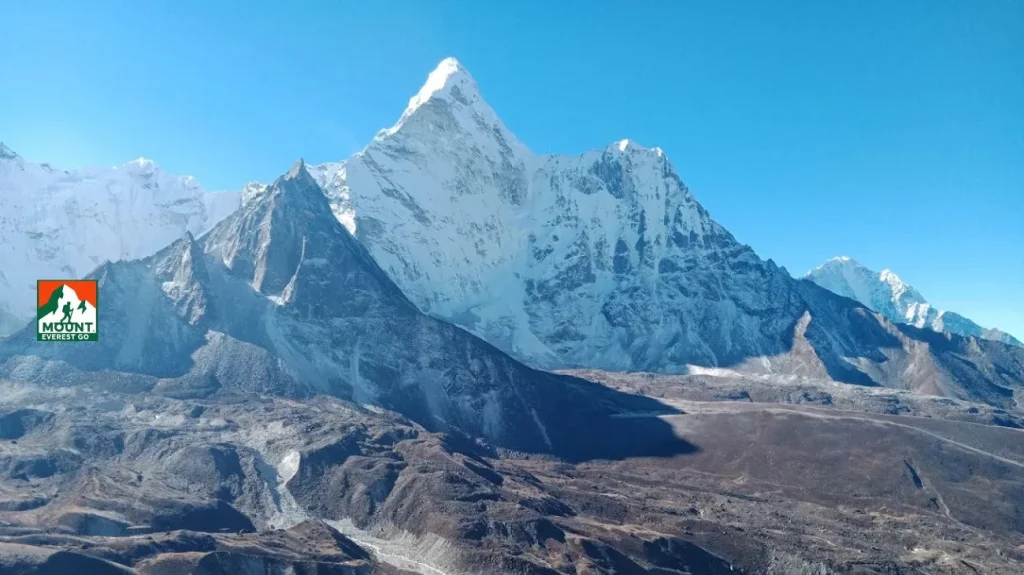
Autumn is the peak trekking season in Nepal for a reason. The monsoon retreats, leaving air so clean and clear that distant peaks appear unnaturally close. Temperatures are comfortable. The landscape is still vivid green from the monsoon rains but framed against sharp blue skies. Nepal’s most important festivals fill the teahouses with celebration.
October is the single most popular trekking month in Nepal and for the EBC specifically, it is the month that most trekkers consider the absolute best.
| 🍃 September ★★★ Good (second half excellent) | EBC (5,364m): Day +5° / -5°C | Night EBC nights around -6°C to -8°C Lukla (2,860m): Day 10°–18°C | Night 5°–10°C Crowds: Low to moderate — building toward October Flights: Improving — reliable by mid-September Rain/Snow: Early monsoon rain clearing — post-monsoon lushness |
What September is really like
September is a tale of two halves. The first half is still monsoon territory — clouds, intermittent rain, and unreliable Lukla flights. The second half is the arrival of autumn proper: skies clearing dramatically, post-monsoon greenness creating a vivid backdrop, and the trail waking up as trekkers begin to arrive.
Late September is underrated. Crowds are lighter than October but conditions are already excellent. The landscape carries the extraordinary lushness of the monsoon, forests still intensely green, waterfalls still running, but framed by the crystal clarity of post-monsoon sky. Prices are lower than October.
If you want the best of autumn without October crowds, target September 20 – October 5. Weather is excellent, teahouses are available without pre-booking stress, and the trail has the energetic feel of peak season beginning.
- Allow buffer days in early September — lingering monsoon possible
- Second half of September: treat as full peak season in terms of conditions
- Some festivals (early Dashain dates) can fall in late September
| 🍂 October ★★★★★ The Best Single Month | EBC (5,364m): Day +2° / -10°C | Night EBC nights around -10°C to -12°C Lukla (2,860m): Day 12°–20°C | Night 3°–8°C Crowds: Peak season — busiest month of the year Flights: Excellent — most reliable month Rain/Snow: Virtually zero — driest month of the year |
What October is really like
October is the jewel of the Himalayan trekking calendar. Ask any experienced EBC guide which month they would pick if they could only go once, and most will say October without hesitation.
The monsoon has thoroughly cleared, leaving the air the cleanest it will be all year. The skies are a shade of blue that photographs cannot fully capture. Visibility on Kala Patthar sunrise, Everest lit gold above a sea of frozen shadow, is at its clearest. Daytime temperatures at EBC hover around +2°C, nights drop to -10°C, and the weather is reliably stable for days at a stretch.
October also coincides with two of Nepal’s most important festivals. Dashain, a 15-day Hindu celebration of the goddess Durga’s triumph over evil, fills the lower valleys with family reunion energy, decorated homes, and remarkable hospitality toward visitors. Mani Rimdu at Tengboche Monastery, the most important Sherpa Buddhist festival, falls in late October or early November: three days of masked dances performed by monks against a backdrop of Himalayan peaks.
The Mani Rimdu Festival 2026 takes place 26–28 October at Tengboche Monastery. Timing your itinerary to arrive at Tengboche on day two of the festival, when the mask dances occur, is one of the most extraordinary cultural experiences available anywhere in the world.
October is the most crowded month on the EBC trail. Teahouses at Namche Bazaar, Dingboche, and Gorak Shep fill completely. Book accommodation 4–6 months in advance. Lukla flights run at maximum capacity, have contingency plans.
- Book teahouses at all key stops 4–6 months ahead
- Dashain festival: expect reduced government services in Kathmandu
- Mani Rimdu: confirm exact dates (set annually by Tengboche head lama)
- Prices are at peak — budget accordingly
- Consider leaving Kathmandu 2 days early as a buffer for Lukla flight delays
| 🌾 November ★★★★ Excellent — the insider’s choice | EBC (5,364m): Day -1° / -14°C | Night EBC nights around -15°C to -18°C Lukla (2,860m): Day 8°–16°C | Night 0°–5°C Crowds: Moderate — thins significantly after mid-November Flights: Excellent Rain/Snow: Virtually zero — clear and dry all month |
What November is really like
November is the month that experienced EBC trekkers quietly recommend to their friends. It delivers virtually everything October offers, crystal clear skies, stable weather, zero precipitation, perfect visibility, but with meaningfully fewer crowds and slightly lower prices. From mid-November onward, the trail is markedly quieter.
The trade-off is cold. November temperatures are colder than October, and the drop is most pronounced at altitude. EBC nights in November can reach -18°C. Gorak Shep nights are legitimately harsh. You need the same gear as January, but the weather is dramatically more stable.
Mani Rimdu at Tengboche typically falls in the first week of November. In 2025, the festival took place November 5–7. In 2026, the dates are October 26–28. Confirm exact dates with your trekking company when booking, these are set annually according to the Tibetan lunar calendar.
November is the sweet spot for trekkers who want October's weather without October's queues. The weeks between October peak season and December winter are particularly rewarding. Target November 1–20 for the best balance.
- Carry sleeping bag rated to -20°C from Dingboche upward
- Mani Rimdu: confirm current year dates before booking
- Late November: winter begins to bite — some teahouses reducing hours
- Sunsets from Kala Patthar in November are among the most photographed in Nepal
Which Month Is Right for You? A Decision Guide
Different trekkers have different priorities. Here is how to match the month to what matters most to you.
| Your priority | Best month(s) |
| Best mountain views / photography | October (clearest air), November (emptier Kala Patthar), April (spring light) |
| Avoid crowds | November (post mid-month), March, May (mid-month onward) |
| Best weather stability | October and April (lowest precipitation, most stable) |
| Cultural experiences / festivals | October (Dashain + possibly Mani Rimdu), November (Mani Rimdu), May (Everest Day marathon) |
| See Everest expedition teams | April and May (spring climbing season at Base Camp) |
| Budget / lower cost | March, June (if you are experienced and flexible), December |
| Solitude and silence | January, February, late August (transitional), mid-November onward |
| First time trekker | April or October — the most supported, reliable, and rewarding seasons |
| Rhododendron forests in bloom | April (peak bloom), March (early bloom below 3,000m) |
| Warm temperatures at all altitudes | May (warmest spring month) |
| Lush, green landscape | September (post-monsoon green with cleared skies) |
Lukla Flights: The Wildcard Every Trekker Needs to Plan For
Tenzing-Hillary Airport in Lukla is widely described as one of the most challenging airports in the world, a short upward-sloping runway ending at a sheer drop. All flights operate in the morning only, when visibility is most reliable. Weather cancellations happen in every season.
Since 2023, Nepal has added alternative departure options from Manthali (Ramechhap), reducing congestion. Your trekking company will advise which departure point is appropriate for your dates.
| Season | Flight reliability | Typical delay risk | Advice |
| Jan–Feb | High — clear winter skies | Low (snow possible) | Morning flights, 1 buffer day |
| Mar–May | Excellent — peak season | Low–moderate late May | Book far ahead, 2 buffer days |
| Jun–Aug | Unreliable — monsoon | High — daily cancellations | 3+ buffer days absolute minimum |
| Sep | Improving mid-month | Moderate early, low late | 2 buffer days, flexible dates |
| Oct–Nov | Excellent — peak season | Low — best of the year | Book 4+ months ahead, 2 buffer days |
| Dec | Good — clear, dry | Low | Morning flights, 1 buffer day |
Always insure your international connection separately from your Nepal flights. A Lukla delay of 2–3 days is entirely normal and should not put your return international flight at risk. Build the buffer.
Festivals on the EBC Trail: A Cultural Layer No Other Season Adds
Mani Rimdu: The Everest Region’s Greatest Festival
Mani Rimdu is the most important festival of the Sherpa Buddhist community, celebrated at Tengboche Monastery (3,867m), which sits directly on the EBC route. The three public days feature monks in elaborate masks performing dances that depict the triumph of Buddhism over the ancient Bon religion, set against a backdrop of Ama Dablam and the Khumbu peaks.
The festival falls annually on the full moon of the ninth Tibetan lunar month, typically late October or early November. In 2025 it was November 5–7. In 2026, dates are October 26–28. Confirm the current year’s dates with your guide when booking, the head lama of Tengboche sets them annually.
Timing your EBC itinerary so you pass through Tengboche on the second day (when the mask dances are performed) requires coordination with your guide. Mount Everest Go can build your itinerary around the festival dates.
Dashain: Nepal’s Biggest Festival
Dashain is a 15-day Hindu festival celebrating the goddess Durga’s victory over evil. It falls in September or October (specific dates shift annually with the lunar calendar). During Dashain, domestic flights and government offices operate on reduced schedules, and many porters and guides request time with their families. Plan around this if your trek overlaps.
On the trail, Dashain means warm hospitality, decorated villages, and the chance to receive a tika blessing from a teahouse family, one of the most genuine cultural exchanges available to any trekker.
The Tenzing-Hillary Everest Marathon — May 29
On May 29 each year, the anniversary of the first Everest summit: the Tenzing-Hillary Marathon takes place from Base Camp to Namche Bazaar. Forty-two kilometres. Up to 5,364m at the start. One of the highest and most demanding running events on earth. Even if you are not running, watching athletes depart Base Camp at dawn on Everest Day is an extraordinary experience.
Essential Gear by Season
The gear required for EBC shifts significantly with the season. The items below represent what changes, not the complete packing list.
| Season | Critical gear additions vs standard EBC kit |
| Spring (Mar–May) | Sleeping bag rated -20°C minimum, waterproof shell (late May), sunscreen SPF 50+, UV sunglasses, layering system for 25°C daily swings |
| Monsoon (Jun–Aug) | Full waterproof kit head-to-toe (not just a shell), leech socks, quick-dry everything, waterproof bags for all electronics, extra buffer days and flexible return flights |
| Autumn (Sep–Nov) | Sleeping bag -20°C (November critical), down jacket for above 4,000m, hand warmer inserts, wind-proof outer layer for Kala Patthar summit |
| Winter (Dec–Feb) | -30°C rated sleeping bag, full expedition down jacket, insulated boot liners, chemical hand warmers, face protection (balaclava), extra food/emergency kit for closed teahouses |
Quality gear is available for rent in Kathmandu's Thamel district at reasonable cost. Down jackets, sleeping bags, trekking poles, and gaiters are all available. Please confirm your availability before your trek. Mount Everest go can arrange gear rental as part of your package.
Our Recommendation: What the Locals Actually Say
After 15+ years of guiding trekkers to Everest Base Camp across all seasons, the team at Mount Everest go has a consistent recommendation: if you can only go once and your goal is the full Everest experience: mountain views, cultural richness, comfortable temperatures, and the best possible chance of a clear Kala Patthar sunrise, book October.
If you want the same quality of experience with fewer people and slightly lower costs, book November (first three weeks) or April. If you want something entirely different: silence, solitude, and a raw encounter with the Himalayas, consider February or late November with full winter gear.
What we never recommend without significant prior high-altitude experience: July or August. The trail is there. The permits are available. But the experience is a fraction of what the same trail delivers in any other season.
The right month is the one that matches your priorities, your fitness, your gear, and your tolerance for crowds versus cold. Whatever you choose, EBC will change you. Every month on that trail offers something no other place on earth can.
Mount Everest go (mounteverestgo.com) is a TAAN-registered agency based in Kathmandu with 15+ years of EBC guiding experience. We run private and group EBC departures across all seasons and can build an itinerary timed around festivals, optimal weather windows, or your specific travel dates. Contact us for a free consultation.
Frequently Asked Questions
What is the absolute best month to trek Everest Base Camp?
October offers the single best combination of clear skies, stable weather, comfortable temperatures, and cultural richness. April is an equally strong choice for those who prefer spring scenery and the atmosphere of Everest climbing season. If you are a first-time trekker and can only choose one month, October.
Can I trek EBC in monsoon (June–August)?
Technically yes. Practically, most experienced guides would not recommend it for a first-time trekker. Lukla flights are highly unreliable, mountain views are largely obscured, trails below 3,000m are muddy and leech-infested, and the full EBC experience is significantly diminished. Experienced trekkers who understand these trade-offs and want solitude sometimes choose late August.
Is winter (December–February) too cold for EBC?
For most trekkers: yes, unless they have significant cold-weather experience. Nights at EBC drop to -25°C or below in January and February. Teahouses above Namche reduce services. Trails are icy above 4,000m. For experienced mountaineers or cold-weather trekkers who want solitude and drama, winter can be extraordinary. Not for beginners.
When should I book my Everest Base Camp trek?
For October and April (peak seasons), book 4–6 months in advance; Lukla flights and popular teahouses fill up significantly in advance. For March, November, and December, 2–3 months ahead is generally sufficient. For monsoon or January/February, availability is rarely a problem, but your focus should be on weather monitoring rather than booking lead times.
What festivals can I see on the EBC trek?
Mani Rimdu at Tengboche Monastery (late October or early November annually, confirm current year dates) is the most significant festival directly on the EBC route. Dashain falls in September/October and is celebrated in the lower valleys. The Tenzing-Hillary Everest Marathon takes place on May 29. Mount Everest Go can time your itinerary to coincide with any of these.
How reliable are Lukla flights?
Lukla flights operate only in the morning, only when visibility permits, and are subject to weather cancellation in every season. October and April have the best reliability. Monsoon months (June–August) have the worst. Always build 2 buffer days into your Kathmandu schedule, one at the beginning for potential departure delays, one at the end before any international flight connection.

 English
  Deutsch
  Svenska
  Dansk
Dansk  Русский
  Français
  Português
  Español
  Polski
  简体中文
简体中文  日本語
日本語  ไทย
ไทย  العربية